


Our Vision
Uplifting the living standard of the people of the Vavuniya district through excellent service delivery.
Our Mission
Implementing government policies which aiming good governance for sustainable development through directing human resources correctly and managing the physical resources optimally.
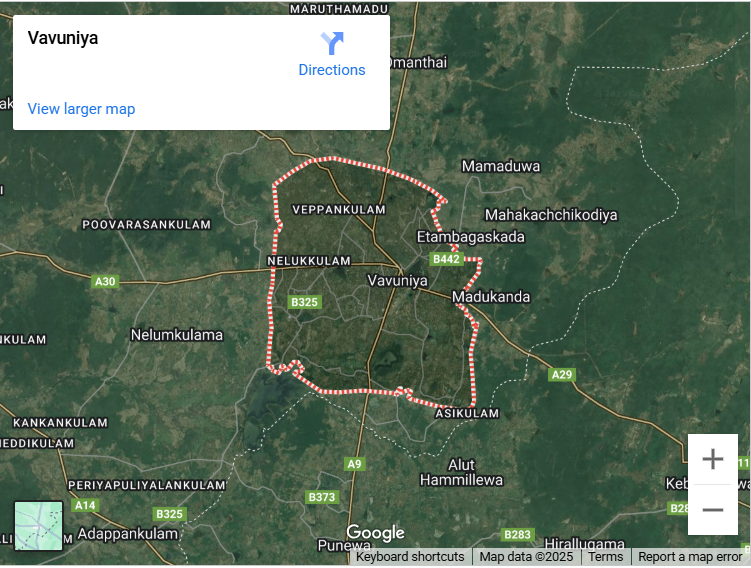
Vavuniya District is situated in gate way of the Northern Province of Sri Lanka about 266Km away from Colombo. Geographically most of the area of the district lies on the main land. The District approximately covers a land area of 1891sqKm.
The boundaries of District are
- North - Mullaitivu District
- South - Anuradhapura District
- East - Tincomalee & Anuradhapura Districts
- West - Mullaitivu & Mannar District
The District is consisting four Divisional Secretary Divisions, these are Vavuniya, Vavuniya South, Vavuniya North and Vengalacheddikkulam. The DS divisions are further divided to 102 Grama Niladhari Divisions and 517 villages.The climatic condition of this district is dry humid and tropical. The average annual rainfall in the district is 1461.10mm and 70% of the rain fall receives during the period from September to December by north-west monsoon period.
The remaining period other than afore said of the year is dry and warm. Because of the warm temperature every year from June to August is considered as dry season. The monthly average temperature range is 23°C to 25.4°C.
Administratively this district constitutes part of Wanni Electoral District. This district has 4 Divisional Secretary divisions and covers 102 Grama Niladharies divisions and 505villages. There are 5 Local Bodies functioning in this District. Such us one Urban Council and four Pradeshiya Sabhas.
Total population of Vavuniya District is 193,891 consisting of 59,898 families as at 31/12/2024 male 94,632, and female 99,259 are living in vavuniya District. Ethnic compossion of District is as follows
- Tamils : - 79 %
- Sinhales : - 10 %°
- Muslims : - 11%
Religions wise composition of the district is as follows
- Hindus: - 68%
- Buddhist : - 10%
- Catholics : - 14%
- Moors : - 8%
The Vavuniya District is in the Northern part of Sri Lanka. It covers of an area about 200,449 Ha (2004.49 Sq km). This is 10% of the Land area of the entire Northern and Eastern Provinces and 3% of the island.
The District is categorized under the area's dry zone of Srilanka. The climatological conditions are suitable for cultivation. The District is divided into Agro ecological regions of DDLI, DLI and DL.Id.
No of Women Headed families - 7842
Vavuniya District had an estimated population of 194,541 as at 30.06.2025. The female population is 99,722. As well as 7,842 Women headed families are in this district.
Women empowering is a powerful movement that promotes solidarity, Support and upliftment among women. Several Organizations are working to support and empower women-headed families in Vavuniya District.
Here are some initiatives-
The Ministry of Women’s affairs social empowerment in Vavuniya district has implemented various initiatives to support and empower women Headed families. Some of Women’s affairs, NPC, provided livelihood assistance to women headed households and women entrepreneurs in Vavuniya district. This initiative aims to Support women in Starting or Strengthening their own businesses. enabling them to become financially stable and independent.
As well as None of these initiatives include
• National Policy on Gender Equality and women’s Empowerment
• Women’s Economic Empowerment through Entrepreneurship, Leadership and Networking
• Project for Supporting Women’s Economic Empowerment
• Livelihood assistance for women
The ministry initiatives are designed to promote women’s empowerment, economic independence and social wellbeing, ultimately contributing to a more equitable and just society.
The Ministry – Government organizations also working for this group. Such as Fosdoo, Chrysalis, Social economical and environment Developers (SEED). These initiatives are demonstrating the efforts being made to support women-headed families in Vavuniya District. By providing livelihood assistance promoting entrepreneurship and offering education and training. These Organizations aim to empower women and enhance their Socio - economic well - being.
General Hospital is the main health and medical institution for the people of Vavuniya district. All curative institutions come under the administration of Regional Director of Health Services, Vavuniya. These institutions are one General Hospital, one Base hospital, 15 Divisional Hospitals, and 6 Primary Medical Care Units. In the Preventive sector under the each Medical Officer of Health (MOH) there are clinic centers which provide mainly Maternal and Child Health Care services. Regional Director of Health Services (RDHS) in charge of all preventive, curative and rehabilitative health activities in the district. Under RDHS, Head of institutions namely Medical Superintendent, District Medical Officers, Medical Officers in charge and Medical Officer of Health are functioning. Under Ayurvedic system there is 01 District Ayurvedic Hospital, 02 Central Ayurvedic Hospitals, In addition there are 09 Free Ayurvedic Dispensaries under Local Government.
Fisheries in Vavuniya District are an essential part of local development, contributing to food security, nutrition, and the livelihoods of rural communities. Since the district is located inland without direct access to the sea, its fisheries sector mainly depends on inland fisheries and aquaculture. Reservoirs, seasonal tanks, and ponds across the district are regularly stocked with fish fingerlings such as tilapia, carps, and freshwater prawns. This program has helped to ensure a consistent supply of affordable fish, which is the main source of animal protein for many households in the district.
The National Aquaculture Development Authority of Sri Lanka (NAQDA) plays a leading role in strengthening the fisheries sector in Vavuniya. Through the Iranaimadu Aquaculture Development Center and other facilities, NAQDA produces and distributes quality fish seed, undertakes stocking programs, and provides technical support for farmers and fishing communities. Regular training and awareness programs are conducted on aquaculture techniques, pond management, feed utilization, and value addition, enabling fishers and farmer-fishers to enhance both productivity and income.
Fishing communities in the district are largely small-scale, and their livelihoods are closely tied to seasonal water availability. With NAQDA’s guidance, these communities benefit from improved infrastructure, better access to markets, and opportunities to adopt modern technologies.
Overall, the fisheries sector in Vavuniya, supported by NAQDA initiatives, is not only a source of nutritious food but also a vital driver of rural socio-economic development and poverty reduction.
Families deploy the agricultural activities
According to the basic district information as of December 31, 2024, there are 59,898 families residing in the district. Out of these, approximately 18,053 families are directly dependent on agriculture for their livelihood. To support agricultural development and services in the region, there are 9 Agrarian Service Centres functioning within the district. Additionally, the district is served by 32 Agriculture Instructors who provide technical guidance and training to farmers. The presence of these service centres and trained personnel plays a crucial role in enhancing agricultural productivity. Furthermore, several registered farmers' organizations operate within the district, ensuring collective support, access to subsidies, and smooth implementation of government schemes aimed at improving farming practices and rural income.
Main agricultural products and their harvesting amount
Agriculture in Vavuniya District is diverse and predominantly centred around paddy cultivation, which accounts for the largest portion of cultivated land. According to recent data, out of the total 38,908 hectares of cultivated land, paddy covers 24,617 ha, making up 64% of the district’s agricultural land use. On average, paddy cultivation remains a major contributor to agricultural output, with typical yields of around 80,962 metric tons (MT) during the Maha season and approximately 22,047 MT in the Yala season. Similarly, Other Field Crops (OFC) cultivation shows notable contributions, with average yields of about 13,098 MT during Yala and 8,685 MT during Maha. These averages reflect the seasonal distribution and overall importance of both paddy and OFC cultivation in the agricultural sector.
The district also cultivates dry zone vegetables on 2,038 ha (6%), including brinjal, okra, and pumpkin. Fruit crops, especially banana, mango, and papaya, are grown on 3,225 ha (8.2%). Coconut, a major plantation crop, occupies 2,000 ha, playing a key role in household food security and income generation.
Moreover, Vavuniya contributes to export agriculture through the cultivation of cinnamon and pepper, which, though limited to 20 ha (0.05%), have high market value and export potential. These figures reflect the most recent agricultural trends and land usage data, highlighting the district’s growing diversification and agricultural potential.
Farmers Handle the Agriculture Technical
Farmers in these regions employ a variety of tools and techniques to enhance productivity. In paddy cultivation, traditional transplanting is still widely practiced, where seedlings are manually shifted from nurseries to main fields. To reduce labour and time, farmers also use power weeders for removing weeds and parachute model transplanting, which involves planting seedlings raised in floating trays directly into the field for better spacing and survival rate. For other field crops, tools such as the row seeder and manual seeder help in sowing seeds with accuracy and efficiency. Inter-cultivators are used for weeding and soil loosening between rows. Additionally, seed paddy cleaners are utilized to clean and grade paddy seeds before sowing. For groundnut cultivation, specialized tools like the ground bee coordinator assist in efficient pod sowing and harvesting operations, reducing manual effort and increasing yield efficiency.
The district is well-served by facilities that provide these traditional services. While dedicated standalone Siddha hospitals are less common, the infrastructure for traditional medicine is robust. Vavuniya District is served by one main Government Ayurvedic Hospital, which offers comprehensive inpatient and outpatient care. This primary facility is supported by a network of approximately 15-20 smaller Ayurvedic dispensaries and clinics spread across various towns and divisions. These facilities ensure that the natural, time-tested benefits of these ancient Dravidian healing traditions remain accessible to all residents, offering a vital complement to modern medical services.
Through the Department of Indigenous Medicine, the district maintains a dedicated network of three Ayurvedic curative-care institutions. These include one District Ayurvedic Hospital and two Ayurvedic Dispensaries, all providing essential preventive and curative services at no cost.
Vavuniya District is also served by separate specialized traditional healthcare centers. For example, there's the Rural Ayurvedic Hospital located in Nainamadu, within the Vavuniya North Division Mapcarta. Additionally, two local establishments—Madukanda Ayurveda Hospital and Thalappakkatu Siddha Ayurvedic Hospital—offer complementary services within the town, reinforcing traditional health coverage.
Vavuniya District, located in Sri Lanka’s Northern Province, possesses a vibrant tradition of Siddha medicine, reinforced by periodic health initiatives. Notably, free mobile Siddha medical camps—such as those held on 29 July 2023 at Sriramapuram Thirugnanasambanthar Vidyalaya—were organized in collaboration with the Indian Consulate General (Jaffna) and the Provincial Indigenous Medicine Department, offering screening, diagnosis, consultations, and free medicines to numerous local patients.
In summary, Vavuniya District actively preserves its Siddha heritage through outreach camps, while its Ayurvedic infrastructure—comprising three formal facilities and several local hospitals—ensures widespread, government-supported traditional care for its communities.
The soil of the district is highly fertile due to reddish brown earth, low humid clays and alluvial soil. There are concave valleys and bottomlands. Red-Yellow latro soils are found in the Northern part of the district, and that area is more fertile and has better ground water potential. In the other part of the district, there are hard crystalline rocks with limited ground water potential that determine the substrata.
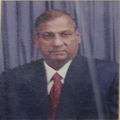
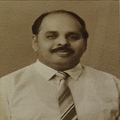
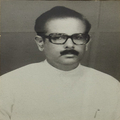
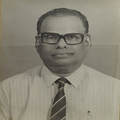
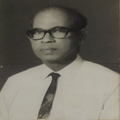
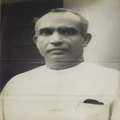
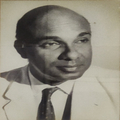
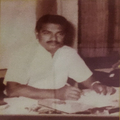
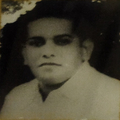
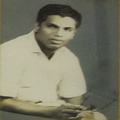
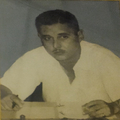
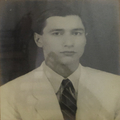
Former Government Agent's
|
Name |
From |
To |
Photo |
| Mr.Thiruchchelvam Thireskumar Esq (Acting) | 2021.07.26 | 2021.08.26 | 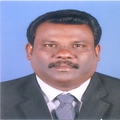
|
| Mr.S.M.Saman Bandulasena Esq | 2020.01.27 | 2021.07.25 |  |
| Mr.I.M.Haniffa Esq | 2018.07.06 | 2020.01.26 | 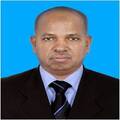 |
|
Mr.Somarathne Vidhanapathirana Esq |
2017.11.24 |
2018.07.05 |
|
|
Mr.M.B.R.Pushpakumara Esq |
2015.11.24 |
2017.11.23 |
|
|
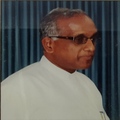
Mr.M.K.Bandula Harischandra Esq |
2012.05.18 |
2015.11.23 |
 |
|
Mrs.P.S.M.Charles Esq |
2008.10.01 |
2012.05.15 |
|
|
Mr.S.Shanmugam Esq |
2005.01.01 |
2008.08.31 |
|
|
Mr.K.Ganesh Esq |
1995.01.21 |
2004.12.31 |
|
|
Mr.S.Thillainadarajah Esq |
1992.02.29 |
1995.01.20 |
|
|
Mr.S.T.Markandu Esq |
1991.01.14 |
1992.02.23 |
|
|
Mr.K.Tharmalinkam Esq |
1990.09.01 |
1991.01.12 |
|
|
Mr.C.Pathmanathan Esq |
1989.08.27 |
1990.07.25 |
|
|
Mr.T.Lankaneson Esq |
1989.01.03 |
1989.08.27 |
|
|
Mr.K.C.Lokeswaran Esq |
1981.10.01 |
1988.07.19 |
|
|
Mr.G.Mudannayake Esq |
1977.09.12 |
1981.09.30 |
|
|
Mr.S.Sivagnanam Esq |
1974.08.01 |
1977.09.12 |
|
|
Mr.L.P.Wickramarachchi Esq |
1973.02.01 |
1974.07.31 |
|
|
Mr.Neville Jayaweera Esq |
1970.07.04 |
1973.01.31 |
|
|
Mr.B.C.Perera Esq |
1968.01.01 |
1970.07.03 |
|
|
Mr.D.Nesiah Esq |
Acting GA for a short period |
|
|
|
Mr.D.M.P.B.Dassanayahe Esq |
1966.01.01 |
1967.10.31 |
|
|
Mr.R.M.P.Senanayake Esq |
1964.07.01 |
1965.12.31 |
|
|
Mr.Hemasiri Premawardana Esq |
1962.07.01 |
1964.06.30 |
|
|
Mr.M.J.Muhssin Esq |
1961.12.01 |
1962.06.30 |
|
|
Mr.H.S.Wanasinghe Esq |
1961.02.01 |
1961.11.30 |
|
|
Mr.D.M.A.Speldewinde Esq |
1958.01.27 |
1961.01.15 |
|
|
Mr.O.R.Wright Esq |
1956.10.15 |
1957.12.31 |
|
|
Mr.T.Rajathurai Esq |
1955.06.03 |
1956.10.14 |
|
|
Mr.E.L.Grenier Esq |
1953.06.16 |
1955.06.02 |
|
|
Mr.P.A.Silva Esq |
1950.10.02 |
1953.06.15 |
|
|
Mr.N.Manicka Idaikkadar Esq |
1948.05.31 |
1950.10.01 |
|
|
Mr.A.S.Kohoban Wickrema Esq |
1946.08.31 |
1948.05.30 |
|
|
Mr.M.L.D.Caspersz Esq |
1945.10.31 |
1946.08.30 |
|
|
Mr.C.B.P.Perera Esq |
1943.11.17 |
1945.10.31 |
|
|
Mr.S.M.Duff Esq |
1936.11.06 |
1943.11.16 |
|
|
Mr.M.F.DE.S.Jeyaratna Esq |
1934.04.23 |
1936.11.05 |
|
|
Mr.G.D.Soysa Esq |
1933.06.09 |
1934.04.22 |
|
|
Mr.Saravanamuthu Navaratnam Esq |
In the twenties years later |
|
|